
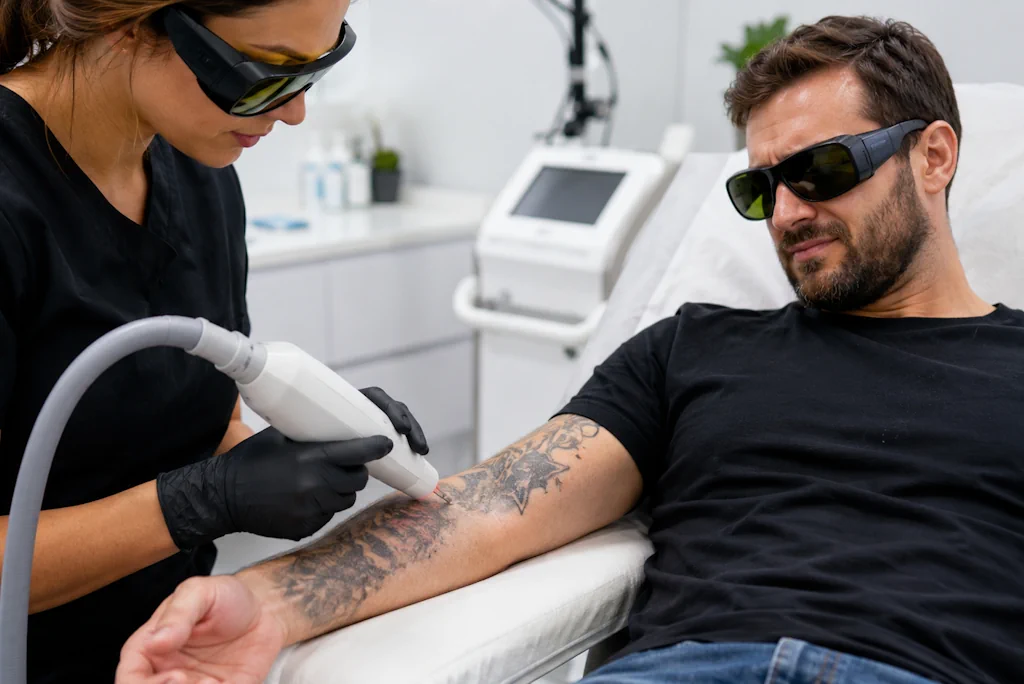
Does Tattoo Removal Hurt More Than the Tattoo Itself?
For most people, yes. Tattoo removal hurts more than getting the tattoo did. Not dramatically so in every case, but the sensation is different, sharper, and often more intense than the original inking experience. That said, pain is deeply personal, and several factors determine exactly how much either process hurts for any given individual.
Understanding why removal feels the way it does makes the whole thing far less daunting.
What Getting a Tattoo Actually Feels Like
A tattoo needle punctures the skin between 50 and 3,000 times per minute, driving ink into the dermis layer just below the surface. Most people describe the sensation as a hot, scratching, or a cat scratch dragged repeatedly across the same spot. It burns. It stings. Over a long session, it becomes a dull, grinding ache that builds progressively.
The discomfort is persistent but relatively predictable. Your brain adjusts to it. Many people find that after the first twenty minutes, the sensation plateaus and becomes manageable. Adrenaline helps considerably.
What Laser Tattoo Removal Actually Feels Like
Laser removal works by firing concentrated pulses of light energy into the skin at precise wavelengths. The laser targets the pigment particles in the ink, shattering them into smaller fragments that your immune system can then carry away over the following weeks. Each pulse delivers an intense, sudden burst of heat directly into the skin tissue.
Most people describe it as an elastic band snapping hard against sunburned skin, over and over again, in rapid succession. Others compare individual pulses to tiny splashes of hot oil. The sensation is sharp, immediate, and concentrated. Unlike tattooing, there is no gradual adjustment period. Each pulse hits with full intensity regardless of how many came before it.
Sessions are short, typically between five and thirty minutes, depending on the size and complexity of the piece being removed. But those minutes can feel considerably longer than an equivalent tattooing session.
Why Removal Often Hurts More
Several specific factors make laser removal harder to tolerate than the original tattoo for many people.
The skin being treated is not fresh. It has already been through one trauma. By the later sessions in a removal course, the skin in that area has been repeatedly stressed, and sensitivity can increase rather than decrease between appointments.
The pulse intensity is not uniform across a session, the way a tattoo needle is. Each laser pulse delivers a sudden jolt rather than a continuous sensation. Many people find intermittent sharp pain harder to habituate to than sustained discomfort. The unpredictability of each pulse keeps the nervous system on high alert throughout.
Certain ink colours require more aggressive laser settings to break down effectively. Black and dark blue inks respond fastest and typically require lower energy levels. Green, yellow, and light blue pigments are far more stubborn. They are demanding higher intensity settings and more sessions. Both of which increase the overall pain load.
Location Makes a Significant Difference
Pain levels for both tattooing and removal vary depending on where on the body the work sits. Bony areas with thin skin and dense nerve endings hurt far more than well-padded muscular zones.
The ribs, spine, hands, feet, neck, inner arms, and backs of knees are the most painful spots for both processes. Removal in these locations is noticeably more intense than removal from the upper arm, thigh, or calf, where the skin sits over more tissue and nerve endings are less concentrated.
Interestingly, some clients report that removal from heavily shaded or solidly packed tattoos hurts more than removal from lightly worked line pieces, simply because the ink density requires more aggressive treatment per session.
The Role of Skin Condition and Healing Between Sessions
Laser removal courses run over multiple sessions spaced six to twelve weeks apart. The skin needs time to heal and for the immune system to clear the shattered ink particles before the next session can take place. Arriving at a session with fully healed, well-moisturised skin generally produces a more tolerable experience than arriving with dry, fragile, or recently sun-exposed skin.
Sun exposure before a session is particularly problematic. Tanned or sunburned skin absorbs laser energy differently, increasing both the risk of skin damage and the intensity of the pain experienced during treatment. Most reputable clinics insist on a minimum of four weeks of sun avoidance on the treatment area before each session.
Numbing Options Available for Removal
Unlike tattooing, where numbing options are available but inconsistently used, most professional laser removal clinics now offer genuine pain management as standard.
Topical anaesthetic creams containing lidocaine, applied under an occlusive dressing for 45 to 60 minutes before the session, reduce surface sensitivity. They do not eliminate the sensation entirely, but they take the sharpest edge off each pulse.
Many clinics also use Zimmer Cryo cooling devices, which blow a stream of extremely cold air onto the skin immediately before, during, and after each laser pulse. This significantly reduces perceived pain by numbing the skin surface in real time and reducing the inflammatory heat response in the tissue. If the clinic you are considering does not offer cooling, it is worth asking why.
Injectable local anaesthetic is available for particularly sensitive areas or for patients with very low pain tolerance, though this is less commonly offered as a routine option.
How Many Sessions and How Does Pain Change Over Time?
Most professional tattoos require between six and twelve sessions for complete removal, with amateur tattoos often clearing faster in three to six sessions due to lower ink density and shallower placement.
Early sessions tend to produce the most visible results as the surface layers of ink shatter and clear quickly. Later sessions target deeper, more stubborn pigment and often require higher laser intensities, which can mean the later stages of a removal course feel more uncomfortable than the early ones, despite the tattoo appearing lighter.
The Honest Comparison
If you sat through your tattoo without significant distress, you will almost certainly manage laser removal. It hurts differently, rather than categorically worse. The sessions are short. The pain does not build the way a long tattoo session builds. And with proper numbing cream and cooling, the experience is genuinely tolerable for the vast majority of clients.
If your tattoo was painful to get, particularly if it sits on a bony or sensitive area, expect removal to challenge you. Go to a clinic that uses cooling technology as standard, apply your numbing cream properly in advance, and plan your sessions on days when you have nothing demanding immediately afterwards.
The discomfort is temporary. The results are permanent.